
Searching Belmont County Civil Dockets
CourtView eServices is Belmont County's main online route to civil court records. The Clerk runs the Common Pleas Legal Division side. The Clerk CourtView entry is where that docket search begins. County Court cases are separate. Use the County Courts entry to reach the Northern, Eastern, and Western Divisions. The Clerk advertises public dockets going back to 1995. Ohio offers no statewide portal that replaces these local tools.
Have a few details ready before you search a Belmont County civil record. You will want the division, a party name, the case number if you know it, and the filing year. CourtView's public search sits behind a CAPTCHA. Field options and document images can differ by install. So don't assume another county's CourtView looks like this one.
- Select the Belmont County court that holds the civil matter.
- Open the appropriate CourtView public-records entry and complete the access screen.
- Search by the name, case type, status, or number that the Belmont County portal makes available.
- Open the matching Belmont County case and read the dated docket entries.
- Contact the custodian for a specific filing, judgment, plain copy, or certification question.
Search a Belmont Civil Case in CourtView
Belmont County gives CourtView two separate landing pages. One is for the Clerk, and one is for the County Courts. The County Courts say their public-records system searches by name, case type, status, and more. Naming differs a bit between offices. The Clerk calls the material public dockets. CourtView itself says case information. Both labels just describe the access route. Neither promises that every paper in a case file appears online.
Numbering follows a published pattern. Common Pleas, Probate, and Juvenile cases use YYTT####. County Court cases use YYTT####L, which adds a location character at the end. Type the case number without spaces. The formats are only a guide. Guessing the two-character type code from the kind of case you want is a mistake.
A Belmont County docket search may still come up empty. In that case, call the court that should hold the case. Have the caption, year, division, and document type in hand. Legal Division records questions go to 740-699-2169. A County Court matter belongs with its named division.
Inside a Belmont County Civil Docket
Under R.C. 2303.12, Belmont County Common Pleas records come in several layers. There is the appearance docket. There is also the trial docket, the journal, the execution docket, and the case file itself. A docket entry tracks activity in the case. It is not automatically the complaint, an exhibit, a transcript, or the full judgment. When the exact legal effect matters, pull the filed item itself. Use that short entry label to find it.
| Case number | A Belmont County identifier in the published YYTT#### format for Common Pleas matters. |
|---|---|
| Parties and caption | The plaintiff and defendant or other case title, not a statement of who is right. |
| Complaint and answer | The filing that begins many civil cases and a responding party’s formal reply. |
| Process and return | Notice issued by the court and the record of attempted or completed service. |
| Entry or judgment | A court-filed direction whose complete text controls over a brief Belmont County docket label. |
County Court dockets are detailed by statute too. Under R.C. 1907.20, the case docket covers parties, pleadings, process, orders, judgments, other proceedings, and relief. Even so, that framework does not promise every document will show up remotely.
Belmont Civil Dockets From Complaint to Judgment
Most Belmont County civil cases follow a familiar arc. A complaint gets filed, process is served, and an answer or other response comes back. From there the docket may show motions, discovery, case management, pretrial or settlement work, trial, judgment, enforcement, and sometimes an appeal. Reading entries in order helps you place each one in context. A single label never tells the whole story.
Post-judgment language deserves close attention. An execution docket entry relates to collection or enforcement steps, and a garnishment is a court process that seeks funds or wages under the applicable procedure. Activity often continues after judgment, so read the later entries before assuming the case closed with the first one shown.
The official R.C. 2303.12 page sets out the record layers described above.
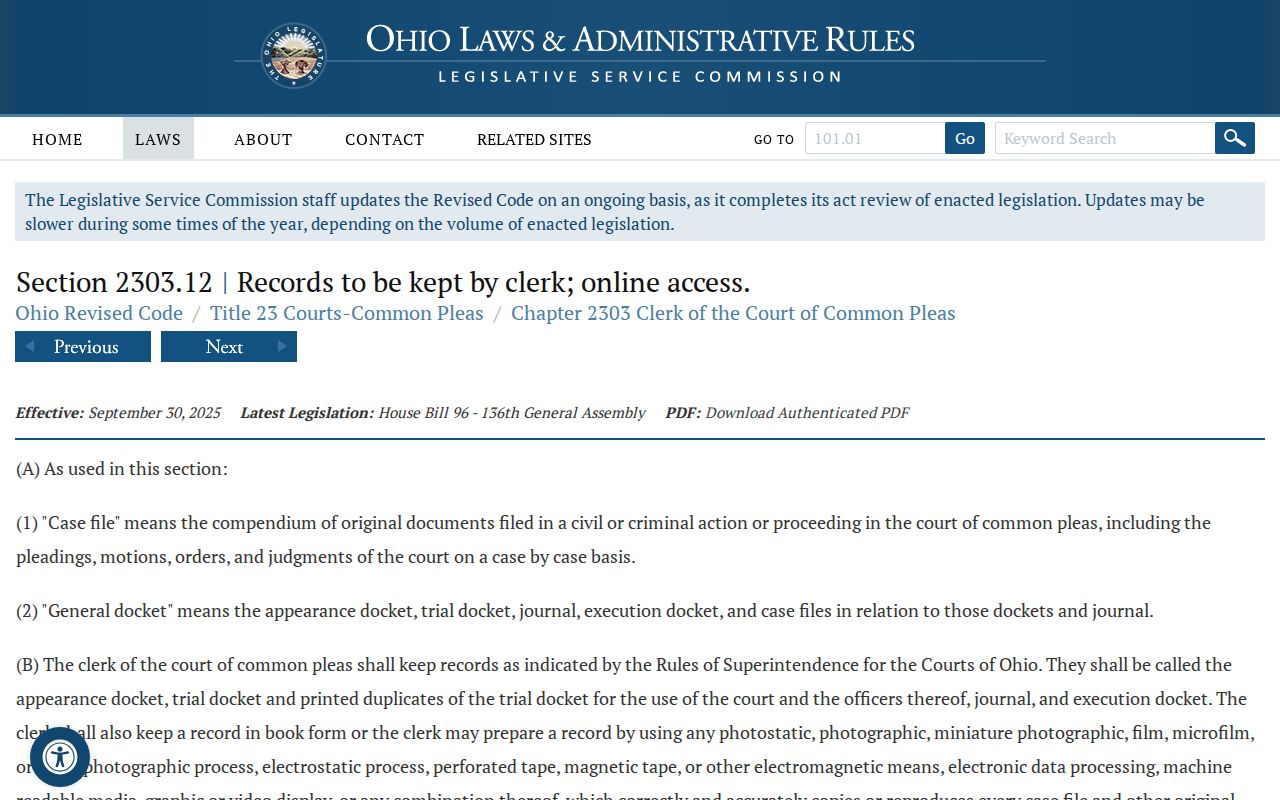
CourtView works well for tracing a Belmont County case chronology. When you need a complete filing or a certified entry, take the next step and request it from the Legal Division.
Civil Case Types on the Docket
Belmont County splits civil work by subject. Common Pleas General Division takes actions involving real estate, property, tort, contract, and business disputes. Domestic Relations is its own division. It handles divorce, dissolution, legal separation, custody, support, and related family matters. Pick the court that matches the case type. A broad sense of the word civil will not point you to the right docket.
- Belmont County real-estate and property disputes in General Division.
- Belmont County tort, contract, and business litigation in General Division.
- Belmont County domestic-relations cases involving divorce, custody, support, or related relief.
- Belmont County limited-jurisdiction civil matters in Northern, Eastern, or Western County Court.
- Belmont County probate and juvenile matters that follow separate court-office access paths.
Don't expect Probate or Juvenile material in the Legal Division's civil route. Probate keeps its own online index from 1994 forward, with no document images online and courthouse terminals instead. Juvenile records carry separate statutory restrictions.
Belmont Civil Service and Returns in County Court
A County Court civil docket in Belmont County may show several things. Look for the complaint, a summons or other process, and a return of service. The return records how service was attempted or completed. It is not an answer. Its presence on the docket settles nothing about the underlying claim.
Belmont County County Court has three limited-jurisdiction divisions. Northern, Eastern, and Western share the County Courts' public-records CourtView path. But each has its own territory and phone routes. Let the citation, notice, or case number tell you which division holds the case. Township geography is no substitute for the court actually named in the file.
The official R.C. 1907.20 page lists what a County Court case docket must contain.
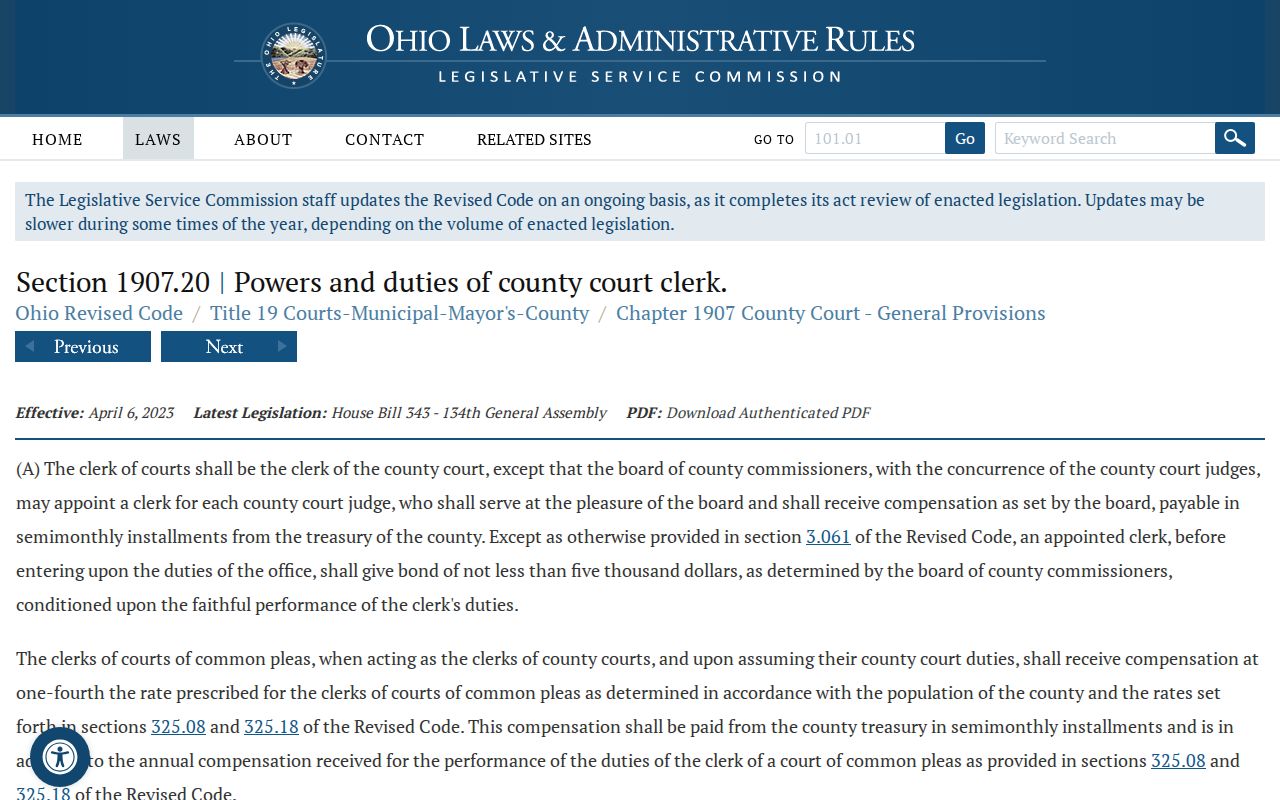
A service entry on a Belmont County docket can read like a puzzle. Ask the clerk which filing sits behind the dated item, or request the actual return before drawing conclusions about what happened.
Civil Docket Settings and Hearings
Civil settings in Belmont County come in several forms. A docket entry might list a pretrial. It might list a settlement conference, a final hearing, a trial, or some other setting. The 2025 Belmont County Local Rules sketch one domestic-relations path. Temporary orders may be decided by affidavit unless the court says otherwise. Discovery closes. Pretrial notice goes out. The case then moves through a settlement conference and a final hearing or trial.
That progression gives a Belmont County date real meaning. It still cannot promise what the next date will be. A notice or an order always beats an assumption pulled from a CourtView screen. Treat the screen as a lead rather than the last word. If a setting is unclear, start with the Belmont County court dates route. Then call the judicial office or the named County Court division for confirmation.
Belmont Domestic-Relations Dockets and Access Limits
Domestic Relations records in Belmont County live within the courthouse structure. The Legal Division counts domestic-relations records among its permanent-record duties. The docket milestones can be public court information. The filings underneath them may carry personal identifiers, financial material, or other restricted content.
So a Belmont County docket entry never means every attachment is available from your desk. Two rules frame the limits. Ohio Rules of Superintendence 44 and 45 govern access to court records. They cover restricted material, redaction, copying, and remote-access discretion. R.C. 2303.901 tells parties to leave personal identifiers out of court filings under the applicable procedures. What you can see depends on the record category, the controlling rule, and the court holding the file.
For Probate, adoption, or juvenile questions, skip the Common Pleas civil-search path. Start with the separate office. The current custodian can explain the records route without giving legal advice.
Civil Docket Access Rules
Online screens do not own the whole Belmont County public docket. CourtView is one research lead among several. The Legal Division counter works when a Common Pleas record question comes up. Its telephone line and email are alternatives too. That office sits on the third floor of the courthouse, at 740-699-2169, and clerk@belmontcountycoc.org. County Court records work differently. Contact the specific Northern, Eastern, or Western division named on the matter.
Belmont County record boundary: Sup.R. 44 and 45 govern court-record access and restrictions. R.C. 2303.12 addresses Common Pleas dockets and files. R.C. 149.43 concerns administrative public records, not a substitute for a court-file request.
A Belmont County case file can be public while one document inside it is not. That filing may be redacted, sealed, unavailable remotely, or held under a separate access rule. Ask for the exact document and confirm the current cost before ordering a copy.
Belmont Civil Filing Deposits Are Not Copy Fees
The Clerk's published costs and fees page covers filing deposits, not copies. It lists figures like a $225 non-jury non-domestic/non-foreclosure complaint, a $525 jury complaint, a $100 notice of appeal, a $100 garnishment, and a $140 execution. Those Belmont County numbers describe what it costs to initiate or pursue a court action.
Copies are a different matter. The Legal Division publishes no certified-copy request form, per-page copy price, certification surcharge, mailing policy, or turnaround on that page. When you request a copy, identify the case number, division, and document title or docket date. Say whether you want a plain or certified copy. Tell the Clerk how you want it delivered. Ask the Clerk to quote the total before paying. The Clerk's official filing-fee page shows the current schedule.
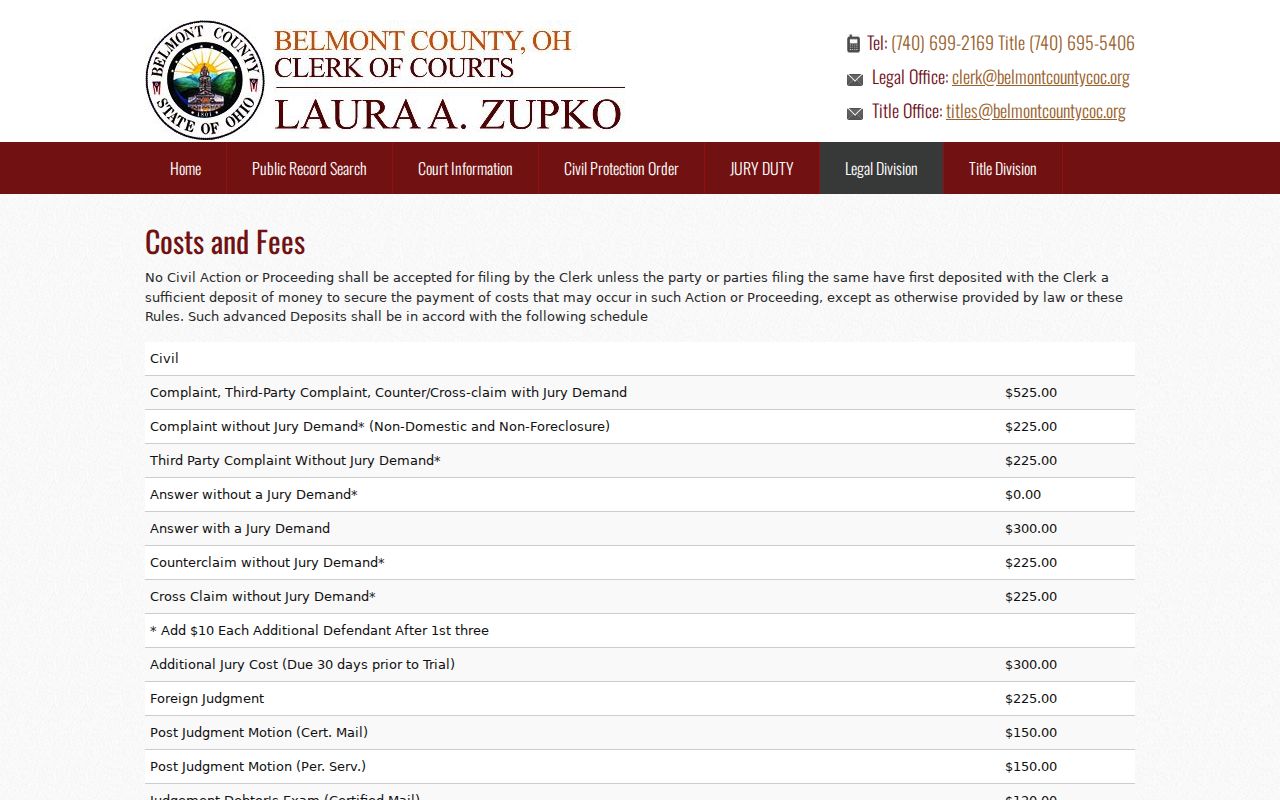
A court record is not a new filing. For Belmont County copies, ask the custodian for the current record-specific charge and the delivery options on offer.
Belmont Civil Appeals to Seventh District
Belmont County Common Pleas cases can climb to the Ohio Seventh District Court of Appeals. The Legal Division keeps Seventh District filings among the permanent records it maintains. Filing a notice of appeal starts appellate review. It does not change the Common Pleas judgment. It does not put every appellate document on the original Belmont County docket.
When an appeal is in play, check both records. Look at the originating Belmont County civil docket. Then follow the appellate court's own record route. The division, case number, and specific document still matter. An appeal does not merge everything into one public screen, because each court keeps its own filings. The official R.C. 149.43 page sets out the public-records rules that apply.
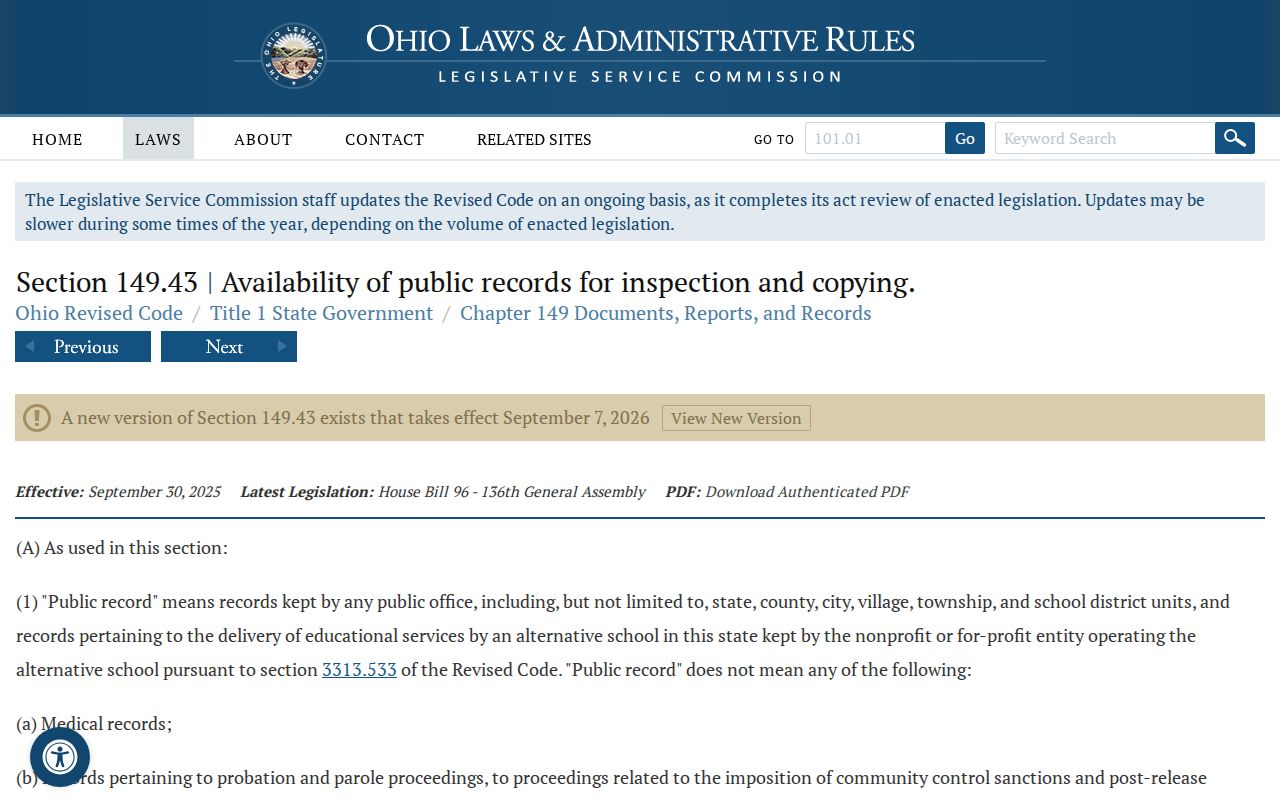
That separation tells a Belmont County requester which custodian to ask before requesting a court file or administrative record.