
Searching Belmont County Criminal Dockets
Belmont County posts its public dockets online through a locally branded version of CourtView eServices. Two doors lead in. The Clerk entry to CourtView opens Common Pleas Legal Division records, while the County Courts entry covers the Northern, Eastern, and Western Divisions. Per the Clerk, public Belmont County docket records reach back to 1995. Note that CourtView is a local resource. Ohio runs no statewide case-detail system on this platform.
Gather three things before you start a Belmont County docket search: the court named on the notice, a full name or case number, and a rough filing year. CourtView puts a CAPTCHA in front of the public search screen. The portal's filters, fields, document images, fees, and update schedule can all shift, so a missing result never settles the question of whether a Belmont County court record exists.
- Choose the Belmont County court path named on the case paper: Common Pleas Legal Division or the appropriate County Court division.
- Open the matching CourtView entry and complete the public-records access steps shown there.
- Use a name, case type, status, or case number only as the Belmont County portal makes available.
- Read the actual Belmont County docket entry, including its date and the court that entered it.
- For an authenticated record, contact the Belmont County custodian rather than relying on a screen display.
Belmont Felony Dockets and Legal Division
Adult felony cases in Belmont County run through the Common Pleas General Division. The Belmont County Clerk of Courts explains that its Legal Division holds the permanent records for those criminal matters. It also keeps related Seventh District filings. Need the file in person? The Legal Division sits on the third floor of the courthouse at 101 West Main Street, St. Clairsville. It posts 740-699-2169 for routing record requests during weekday hours.
One office hears the case. A different office keeps the docket, so start your records work with the Legal Division. Ask for the case file, docket entry, or certified copy by its exact name. Email works too, at clerk@belmontcountycoc.org. Staff there will share procedural and records information all day, but they cannot read a docket entry for you or say what the law means.
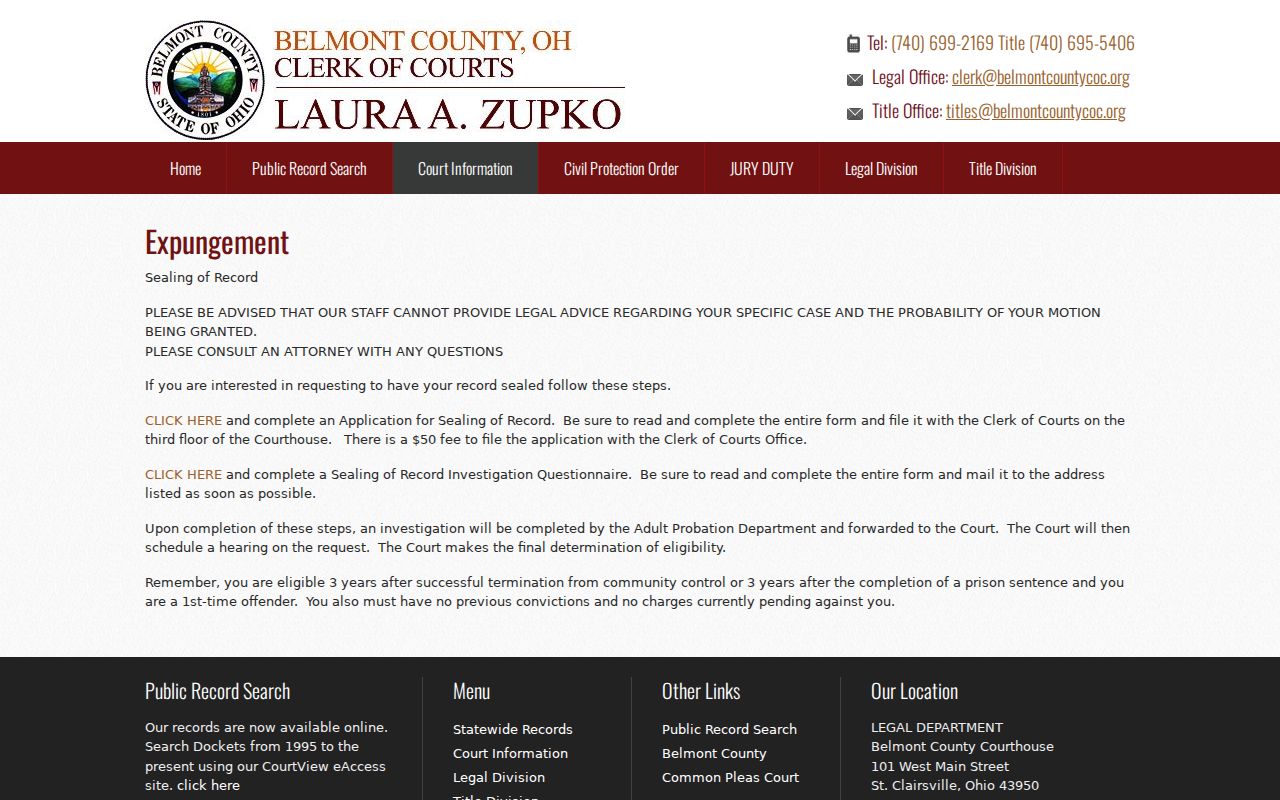
For anyone weighing a clean slate after a case, the Clerk's official sealing and expungement page sets out what that process involves in Belmont County.
If a Belmont County case is not in Common Pleas, go by the court named on the citation or complaint. The county name alone tells you nothing about which court holds the record.
Inside a Belmont County Criminal Docket
A Belmont County docket is a chronological register, not a tidy legal conclusion. It lists events in order as they hit the file. Common Pleas records separate several pieces. They include the appearance docket, the trial docket, the journal, the execution docket, and the underlying case file. A short docket label shows only that something happened. The full order, exhibit, or transcript sits elsewhere in the file.
| Case number | A Belmont County identifier in the published YYTT#### Common Pleas format, entered without spaces. |
|---|---|
| Caption | The title identifying the State and defendant; it is not an outcome statement. |
| Charge or indictment | The filed accusation or charging instrument, which should be read with the actual entry. |
| Setting | An arraignment, pretrial, hearing, plea, trial, or other listed court event. |
| Entry or judgment | A filed court direction whose full text matters more than the abbreviated Belmont County docket label. |
Do not treat a final-looking Belmont County status as the end. Appeals, enforcement activity, or post-judgment filings can still follow it. The reverse holds too. A brand-new filing may stay invisible for a time. Data entry, service, or an access rule controls when it can display. Read the entry itself before drawing any conclusion about a court record.
Belmont Criminal Case Numbers in CourtView
Belmont County publishes a compact CourtView numbering convention. Common Pleas, Probate, and Juvenile cases use YYTT####. The first two characters give the year, the next two give the case-type code, and the final four give the sequence. The sample 22CV0000 shows the format only. It is not a real case result.
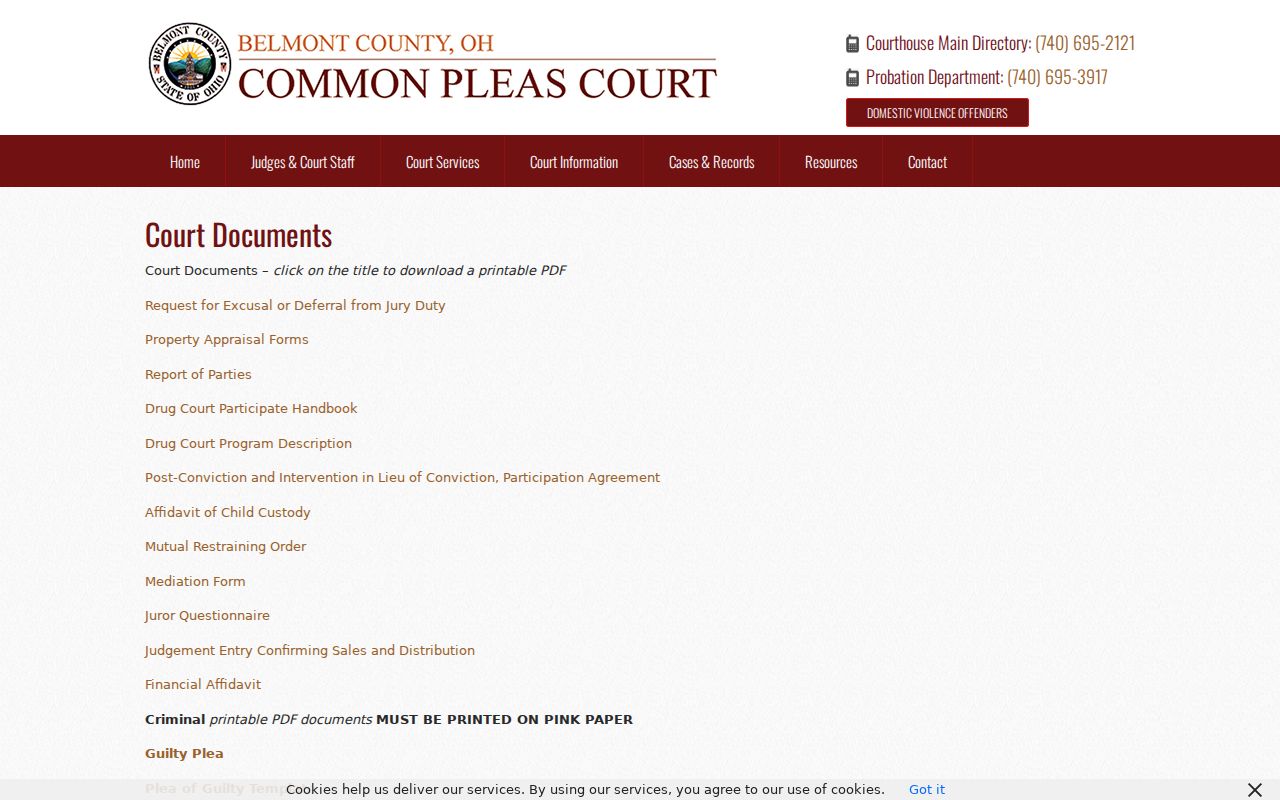
County Court divisions add one more character: YYTT####L, as in 22CV0000W. That last letter marks the County Court location. Keep it attached when the case comes from the Northern, Eastern, or Western Division, and never stretch a format example into a guessed case number for a docket search. The Belmont County Common Pleas document library publishes the numbering material.
When a name search fails to pull up the Belmont County record, call the court itself. Have the division, the approximate year, and whatever case information you already hold, and let staff look rather than guessing at how the portal behaves.
How a Criminal Case Moves
An adult felony in Belmont County usually starts with a charge or complaint. An indictment may follow where one applies. From there the docket may list arraignment, bond, motions or pretrial work, a plea or trial, and a sentencing entry. The exact path varies by case. Two cautions: a bond entry is not a disposition, and an arraignment does not prove the matter was resolved.
Belmont County docket flow: Charge or complaint / indictment › arraignment › bond › motions or pretrial › plea or trial › sentencing entry.
A notice of appeal can show up after a Belmont County judgment. It opens appellate review. It does not reverse the trial-court result on its own. The originating Belmont County record may matter. So may the Ohio Seventh District Court of Appeals record at that later stage.
Belmont Bond, Arraignment, Plea, and Sentencing Terms
The exact status wording inside Belmont County CourtView sits behind the CAPTCHA gate. The standard court terms are safer than any invented portal legend. When an unfamiliar entry appears on a Belmont County docket, get the entry or order from the clerk and ask the court what kind of proceeding is set.
- Arraignment
- A criminal proceeding where the charge is addressed and a plea is entered.
- Bond or bail
- Conditions governing release before trial; they do not state a final outcome.
- Pretrial
- A conference or hearing before trial, not proof of a Belmont County resolution.
- Plea
- A criminal response recognized by law; its effect comes from the filed record and court action.
- Sentencing entry
- The filed order stating the sentence or sanction after conviction or adjudication.
A Belmont County docket entry can tell you where a case stands. Terms like bond, arraignment, plea, and sentencing mark the stages. Reading them does not tell you what every linked document says, so pull the full text before drawing a conclusion about any entry.
Courts That Hold Criminal Dockets
Felony charges in Belmont County belong to the Common Pleas General Division, which handles adult criminal cases where possible imprisonment runs past six months. The Legal Division of that court keeps the related criminal records. Below that sits a separate limited-jurisdiction system, Belmont County Court, split into Northern, Eastern, and Western Divisions. Each division uses the County Courts' CourtView record path and runs its own phone line: 740-676-4490 for Northern, 740-449-2308 for Eastern, and 740-695-2875 for Western.
All three divisions share an office address of 52160 National Road in St. Clairsville and keep weekday hours of 8:00 a.m. to 4:00 p.m. A citation or lower-court complaint should name the division handling the matter, and that name is your best guide. Geography alone can orient you. It cannot promise where a particular Belmont County case was filed.
Juvenile matters travel a separate Belmont County court-office path, and state law limits who may inspect those files. An adult criminal docket search tells you nothing about whether an individual juvenile record is open to you.
Belmont Drug Court and Intervention Documents
Belmont County Common Pleas publishes a Drug Court Participant Handbook and Program Description. It also posts materials on intervention in lieu of conviction. Its contact listings also name a Drug Court probation role. Those documents confirm the specialty program exists. They can also help you spot a court-created form or program reference sitting on a Belmont County criminal docket.
A title proves nothing about a person. It does not show admission, capacity, current fees, graduation standards, or who qualifies. A document name on a Belmont County docket is never a case result. For live program questions, call the court or program contact named in the official materials. Do not trust a docket entry to answer.
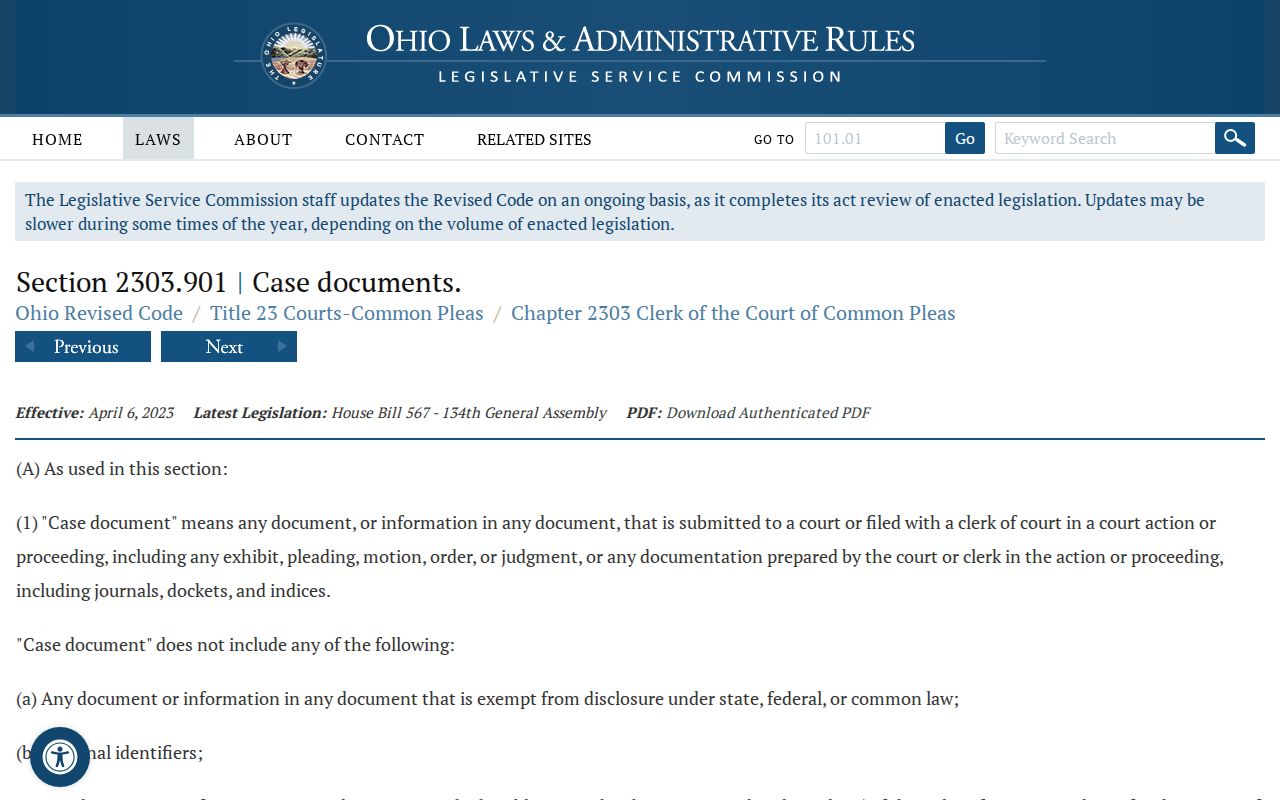
One legal foundation for this programming appears in the official text of R.C. 2303.901. It authorizes specialty dockets and diversion courts of this kind.
Belmont County specialty-program material works best as background. When a public filing mentions a locally named form or court process, that program-level context helps you read it correctly.
Sealed Dockets and Public Access
Two rules control court-record access across Ohio: Rules of Superintendence 44 and 45. Rule 44 sets the definitions. It carves out personal identifiers and restricted records from ordinary case-document access. Rule 45 starts from openness. But it allows redaction, restrictions, actual-cost copying, and court control over what goes online. So a Belmont County case file can be public. Parts of it may stay unsearchable on the web.
Belmont County access rules: Sup.R. 44 and 45 address court records, personal identifiers, access, and copying. R.C. 2303.901 requires omission of personal identifiers under the applicable procedures. R.C. 2152.71 gives juvenile records separate limits.
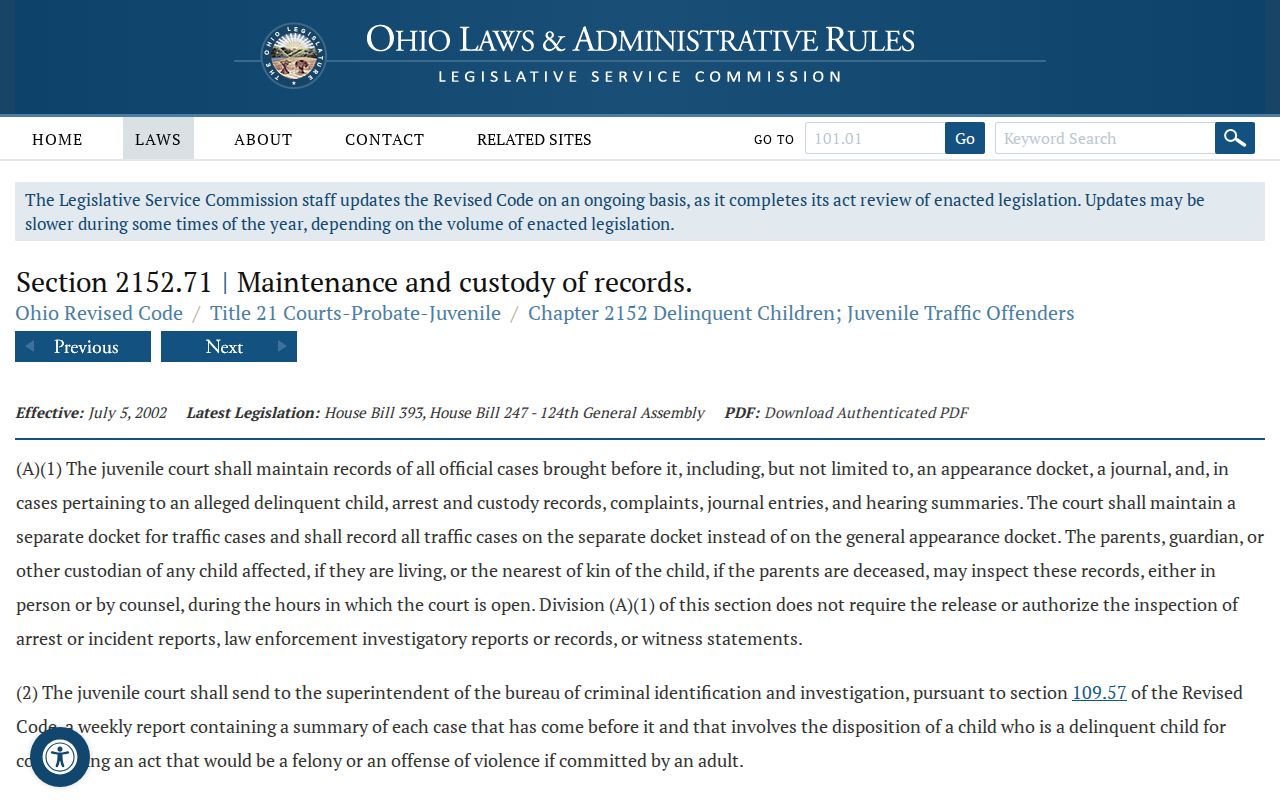
Belmont County juvenile records and Probate adoption files deserve extra caution. Program-level reporting does not open individual files. When a portal returns nothing, a lawful restriction may be the reason. That is different from a missing case. The General Assembly's R.C. 2152.71 page sets out the relevant law.
For adoption confidentiality questions, the official Belmont County Probate adoption information is the right source.
Take any Belmont County access question straight to the court that keeps the record. State plainly what category of record you want and why.
Belmont Criminal Sealing and Redaction
Sealing a record in Belmont County starts with the Clerk's official page. It sends applicants to the Legal Division on the courthouse third floor. The local application path carries a $50 filing charge. The page also links a sealing application and an investigation questionnaire. Note what that $50 covers. It pays for filing the application, not a docket search and not a certified copy.
R.C. 2953.32 lays out the state sealing procedure and its restrictions. Eligibility turns on that statute and current court orders. Treat the Belmont County page as practical guidance, not a full eligibility analysis. Redaction is a different animal from sealing. A Belmont County record may sit in public view in redacted form. It may be restricted in full. Or it may fall under some other access rule entirely.
When a Belmont County criminal docket looks incomplete, do not guess. Request the entry you need from the Legal Division. Read it before concluding the record was sealed, dismissed, or resolved. The related Belmont County case lookup can point you to the local CourtView path. That works once you have a case number.